
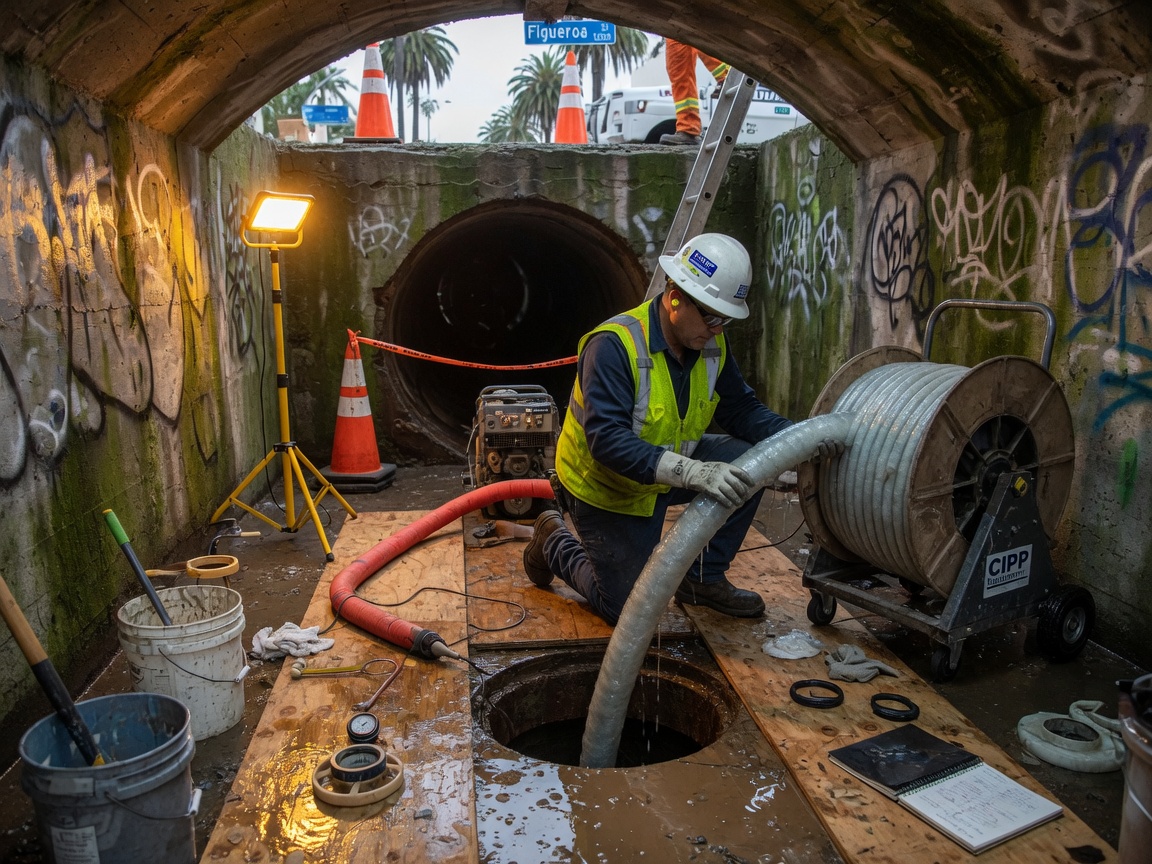
Cured-in-place pipe lining uses a felt or fiberglass tube saturated with epoxy or vinyl ester resin that is inverted or pulled into an existing pipe, then cured with steam, hot water or UV light to form a new structural pipe inside the old one. In Los Angeles the work often targets 4-inch to 8-inch vitrified clay laterals installed before 1960 in neighborhoods such as Boyle Heights, East Los Angeles and South Central where tree roots from ficus and sycamore constantly exploit pipe joints. The Mediterranean climate’s long dry summers shrink clay soils and open cracks wider, while winter rains can saturate the ground and create voids that must be filled before lining.
Access points matter in dense areas. Crews typically enter through existing cleanouts or roof vents in Westwood and Koreatown bungalows rather than cutting new holes in concrete slabs or paver driveways. Hilly terrain in Silver Lake and Echo Park means liners must be calculated for slope to maintain proper flow after installation. Los Angeles County requires video inspection before and after lining plus a permit for any lateral work that connects to the public sewer main.
Edge cases include offset joints greater than one inch, pipes with previous patch repairs, and lines running under structures like the Getty Center access roads or near Dodger Stadium foundations where excavation is impossible. Proper wall thickness selection and resin cure time become critical when groundwater is present near the Los Angeles River channel in Downtown and Chinatown.
Technician insight
In Los Angeles the thing that catches most people out with Cured-In-Place Pipe Lining is the shifting clay soils around older neighborhoods like Silver Lake and Echo Park. Dry summers crack the ground and open joints; when winter rains arrive the liner can deform if the annular space isn’t properly grouted first.
Boyle Heights Lateral Lining
A 1950s bungalow had recurring backups after heavy rain. Camera inspection showed multiple root-filled joints in the 4-inch clay lateral running under the driveway. We lined the full 68-foot run from the house cleanout to the city tap using a 6mm epoxy liner. The new pipe restored flow and eliminated root intrusion without removing any concrete.
Cured-In-Place Pipe Lining Services We Offer
✓Residential Lateral CIPP Lining
Restores 4-inch and 6-inch sewer laterals from house to street main in single-family homes across Hollywood and Santa Monica without removing landscaping or driveways.
✓Commercial Main Line Rehabilitation
Lines larger diameter sewer mains serving apartments and retail buildings in Koreatown and Downtown using structural liners rated for higher flow and traffic loads.
✓Spot Repair Cured-In-Place Lining
Targets isolated cracks or root intrusions between 5 and 20 feet long in older clay pipes common in Echo Park and Silver Lake without lining the entire run.
✓Epoxy Lining for Cast Iron Pipes
Applies a smooth epoxy coating inside aging cast iron stacks and laterals found in pre-war buildings in Westwood and Hancock Park to stop corrosion and restore flow.
✓UV-Cured CIPP for Quick Return to Service
Uses ultraviolet light to cure liners in two to three hours, useful for commercial properties near Santa Monica Pier or Universal Studios that cannot stay offline long.
How it works
- 1
Camera Inspection
Technicians run a high-resolution camera through the line from cleanouts in the yard or roof vent to map length, diameter, defects and any offsets before ordering the liner.
- 2
Hydro Jetting and Root Cutting
High-pressure water clears grease, scale and roots so the liner bonds directly to the host pipe wall in areas with heavy ficus growth like Boyle Heights.
- 3
Liner Inversion or Pull-In
The resin-saturated tube is inverted with air or water pressure or pulled through the pipe and positioned exactly over the damaged section.
- 4
Curing and Final Inspection
Steam, hot water or UV light hardens the resin; a post-cure camera run confirms the new pipe is smooth, watertight and properly sloped before the crew leaves.
Pricing
Pricing varies by pipe length, diameter and access difficulty; call Mon–Fri 8am–6pm or Sat 9am–2pm from our City of Industry location for an on-site assessment.