
2026-10-13 ·
How Los Angeles Soil Shifts Affect Sewer Lines
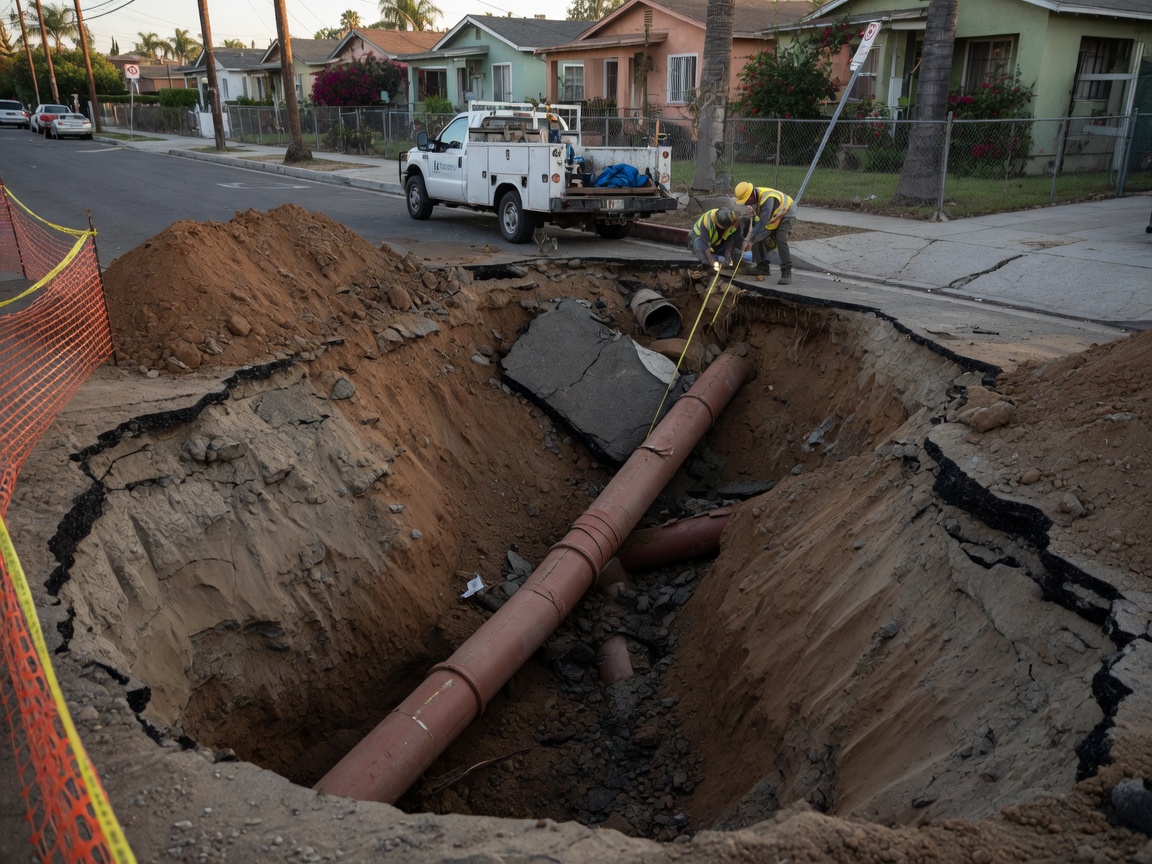
Los Angeles soil shifts move sewer lines by several inches over multiple seasons in clay-heavy zones, cracking joints and creating offsets that allow roots and sediment to enter.
Understanding Los Angeles Soil Types and Movement
Los Angeles County sits on varied geology that includes expansive clay deposits common in the basin floor. These clays absorb water during winter rains and release it during the long dry summers of the Mediterranean climate, causing repeated swelling and shrinking. In flat areas like Boyle Heights and East Los Angeles, this vertical movement pulls on older clay or cast-iron sewer pipes installed decades ago. Hilly terrain around Hollywood and Silver Lake adds lateral pressure as soil creeps downslope. The result is misalignment at joints that were never designed for ongoing ground motion. Homeowners in these neighborhoods often see the first signs when slow drains appear after a wet winter followed by a hot summer. Video pipe inspection reveals the extent of displacement without excavation, showing where the line has dropped or separated. Soil conditions differ sharply between the coastal flats of Venice and the inland valleys, so repairs must account for local geology rather than generic solutions.
How Seasonal Weather Patterns Exacerbate Shifts
Mild winters bring enough rain to saturate clay soils, while warm dry summers pull moisture out and cause contraction. This annual cycle repeats without the deep freezes that affect other regions, so Los Angeles pipes experience steady rather than sudden stress. In Koreatown and Westwood, where many homes date to the 1920s through 1950s, original sewer lines sit in soil that has already undergone dozens of wet-dry cycles. During extended dry periods, the ground shrinks and leaves voids that allow pipes to settle unevenly. After a wet winter, renewed expansion pushes sections back, often creating new cracks at the same weak points. Pasadena and Glendale see similar patterns on their alluvial soils near the foothills. The absence of extreme cold means roots stay active longer, seeking the moisture that leaks from newly shifted joints. Regular hydro jetting can clear debris but does not address the underlying movement that reopens pathways for intrusion.
Effects on Older Sewer Infrastructure in Specific Neighborhoods
Older housing stock in South Central, Watts, and Boyle Heights contains many clay and cast-iron lines that predate modern flexible couplings. These rigid materials fracture when soil shifts even modestly. In Echo Park and Silver Lake, steep lots compound the issue as gravity pulls soil and pipes downhill over time. Downtown Los Angeles properties often sit above shared laterals that cross multiple property lines, so one shifted section can affect several buildings. Santa Monica and Venice face additional challenges from sandy soils mixed with clay lenses that behave differently under the same rainfall. When lines offset, wastewater can leak into the surrounding soil, accelerating corrosion on nearby metal pipes. Sewer line repair crews working in these neighborhoods routinely document offsets of two to four inches at bell-and-spigot joints. Video pipe inspection before any work confirms whether the damage stems from soil movement or other causes such as root intrusion.
Practical Steps for Homeowners in Los Angeles County
Track slow drains or gurgling toilets after the first winter rains, as these often indicate new offsets from soil expansion. Schedule a video inspection rather than repeated drain cleaning when problems recur seasonally. In areas with known clay soils, consider trenchless pipe repair options that minimize disturbance to surrounding ground. Cured-in-place pipe lining can seal joints without removing the original pipe, reducing the chance of further movement during installation. Homeowners in Pasadena and Glendale should also review grading around the foundation to keep winter runoff away from sewer laterals. After any repair, monitor the line during the following dry summer when contraction stress peaks. Inspecting pipes after winter storms in Los Angeles outlines what to look for once rains stop. Factors that influence trenchless pipe repair costs in LA helps residents understand variables tied to local soil conditions.
When to Consider Professional Assessment
Persistent backups that return within weeks after cleaning point to structural issues caused by ongoing soil movement rather than simple clogs. Properties in East Los Angeles and South Central with original sewer lines over fifty years old benefit from proactive inspection before the next wet season. A thorough camera survey identifies whether the line has dropped, separated, or developed multiple cracks from repeated expansion cycles. Crews based at 3647 San Gabriel River Pky - Building 3, City of Industry, CA 90601 can reach most Los Angeles neighborhoods within standard hours: Mon–Fri 8am–6pm, Sat 9am–2pm. Early assessment prevents small offsets from becoming full collapses that require emergency excavation. Documenting conditions before and after each season helps track whether movement is accelerating in a particular stretch of pipe.